
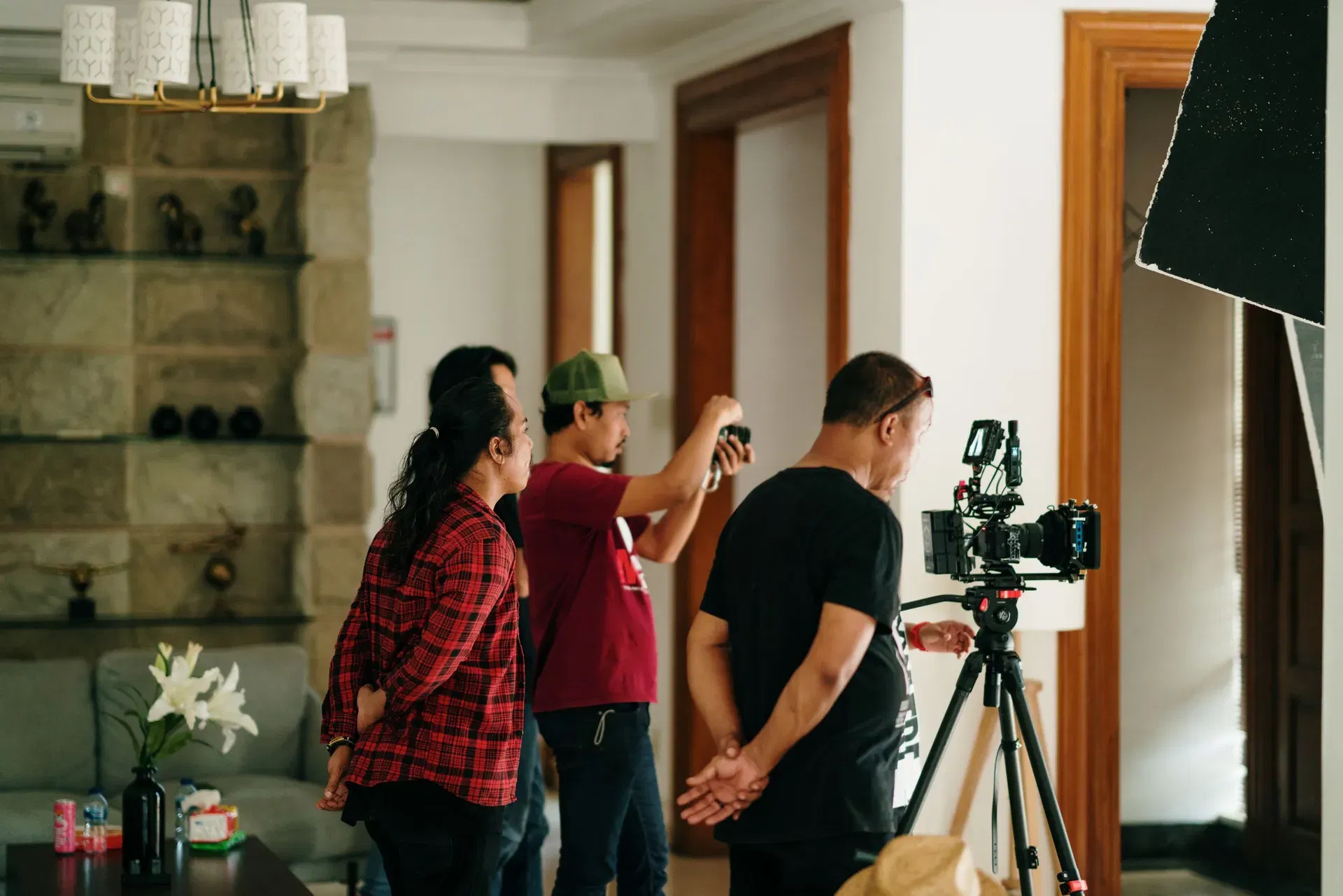
The shoot is won or lost before load-in
Executive interview production fails on schedule long before it fails in front of the lens. Corporate leaders rarely allocate more than thirty to forty-five minutes on their calendar, and that goodwill disappears the second an executive walks into a conference room tangled with cables and unpowered lights. My shoot days run backward from a fifteen-minute setup window: cameras assembled on arrival, lighting pre-rigged and balanced on a stand-in, audio levels verified, and discussion prompts delivered forty-eight hours in advance. When an executive steps into an orderly room where the director is already waiting, their entire demeanor relaxes. The only variable remaining on the call sheet is what they choose to say.
Protecting the leadership calendar
An executive's calendar defines the production schedule, not the camera team. When load-in begins, everything is already staged: camera bodies built, batteries fully cycled, wireless audio channels labeled, and lighting stands pre-positioned based on the scout. Walking into a finished environment immediately changes the subject's tone. A leader who steps into calm order stays poised, while one who steps into frantic rigging carries that agitation directly into their takes. I time freight elevator reservations and security check-ins to the exact minute. Building logistics must be resolved days ahead because production schedules break down in loading docks far more often than behind the monitor.
Carving depth out of flat boardroom lighting
One soft key, one negative fill, one subtle practical accent, and a background that creates architectural depth. Boardrooms fight you with flat overhead commercial tubes, expansive glass walls, and harsh reflections. I switch off overhead fixtures in the shooting zone, bounce an LED into diffusion for a flattering soft key, and place a black flag on the shadow side to maintain natural jawline contrast. Behind the executive, I frame a bookshelf, a structural column, or a corridor sightline rather than a flat drywall wall. White balance is dialed manually for the key light before anyone takes their seat. Fifteen minutes covers the entire setup when the room has been scouted in advance.
Dual-system audio as insurance against building noise
A corrupted audio track cannot be rescheduled, and company leadership does not grant second takes next month. Dual-system recording means the camera captures its own clean audio feed while an independent secondary recorder tracks the lavalier on dedicated media. A sudden wireless glitch or card error never ruins the shoot. I conceal a broadcast lavalier under the lapel and capture thirty seconds of clean room tone before rolling to assist background noise reduction later. Boardrooms are acoustically reflective spaces with glass surfaces and hidden server closets. Two redundant audio paths turn a potential disaster into a minor five-minute alignment in post-production.
Briefing documents over teleprompters
Send a run of show, conversational prompts, technical parameters, and a hard stop time. Executives prepare for camera interviews the same way they prepare for board presentations: through structured documentation. I share a one-page overview forty-eight hours ahead that outlines discussion topics, clarifies that teleprompters are not used, and guarantees the session concludes on time so executive assistants can protect the calendar block. Providing talking points allows leaders to review their key metrics. I never distribute formal scripts. A script encourages memorization, and memorized recitation sounds like defensive PR, which defeats the purpose of filming leadership directly.
Managing compliance and disclosure in regulated sectors
In financial services and public entities, every stated metric involves potential regulatory scrutiny, so pre-production coordination tightens considerably. Discussion outlines are vetted by legal prior to filming, avoiding prompts that could invite forward-looking claims. Legal review of the transcript before full picture edit saves time for all parties. My financial services video production page details how regulated sectors impact timeline estimates, and my executive interview glossary note explains the structure of the format. Protecting executive time on the front end through clear compliance alignment is far cheaper than reshooting statements that legal cannot clear.
Stacking leadership interviews across the morning
Schedule leaders in consecutive forty-five-minute blocks so the room remains active and warm throughout the morning. Brief transition windows between subjects provide ideal opportunities to capture b-roll: hand gestures, document review, and candid interactions. Leaders who book thirty minutes often relax enough to offer thirty-five when the room feels focused, but the schedule always respects the hard stop. Keeping the interviewer consistent preserves tonal continuity across all takes, and marking timecodes on a tablet during the shoot accelerates selects during post-production.
Distribution across enterprise touchpoints
Website headers, investor roadshows, sales enablement decks, and talent acquisition are the primary touchpoints that leverage executive footage. A ninety-second leadership film in an enterprise deck communicates vision more effectively than static slides, and the same footage yields vertical quote segments for executive LinkedIn feeds. My signature films service explains the package this protocol anchors, and my Dallas video production hub outlines how building access and corporate locations influence project planning across North Texas. Capture the conversation cleanly once, extract multiple assets, and protect leadership time above all else.
Streamlining corporate communications review
Establish the approval workflow early and work backward from target delivery dates. Corporate communications teams benefit from reviewing the question outline upfront, while legal often prefers approving a written transcript before reviewing full picture edits. Sharing a summary of intended usage alongside the outline allows reviewers to approve a single clean package rather than trading endless revision rounds. If an answer approaches nonpublic corporate data on set, pausing to clarify the line immediately prevents costly post-production delays. Clear upfront communication ensures project timelines remain predictable from kickoff through master delivery.