
A film reference can give you a look you want to borrow. Turning that reference into a brief means answering a harder question: which creative choices belong in your project, and why? I built the Raw Vision Index to help with that decision. It is a creative assessment tool for films, treatments, and briefs. You can examine a reference, explore how I have applied the thinking in my own work, or work through an assessment of your project.
Start with what you need people to see
Raw Vision is the creative philosophy behind my studio. I look at the particular qualities of the subject, then choose a visual treatment that makes those qualities apparent. For a service, that might mean showing the experience. For a technical product, it might mean showing the operation. A film can also build desire, create an atmosphere, or tell a human story. RVI gives you a way to work through those choices. The subject is what matters about the product, service, person, or process. The treatment is how you present it, through a demonstration, character story, animation, or another approach. The connection is the reason that treatment belongs to this subject and this brand. Those questions apply before a shoot, while you are reviewing a storyboard, and after you have a cut. They give a team something specific to discuss when a visual idea looks appealing but its purpose is still unclear.
Use a reference for the decision it helps you make
The tool brings together 100 reference studies across software, services, physical products, and other subjects. You can filter by the communication task and creative approach, then open a study to examine selected moments. On the main page, the Volvo Trucks example points to a concrete detail: the performer rests his feet on the truck mirrors. The trucks are part of the feat itself. That gives you a useful question for your own product film: can the product take part in the central visual idea? Borrowing that question is more useful than reproducing the stunt. Your product may call for a close demonstration, a diagram, or a different story altogether. Each study includes where the reference may be useful and the limits of transferring it to another assignment. The reference studies use sampled frames and machine transcripts; they are creative readings rather than measured audience results.
See how the thinking changes the brief
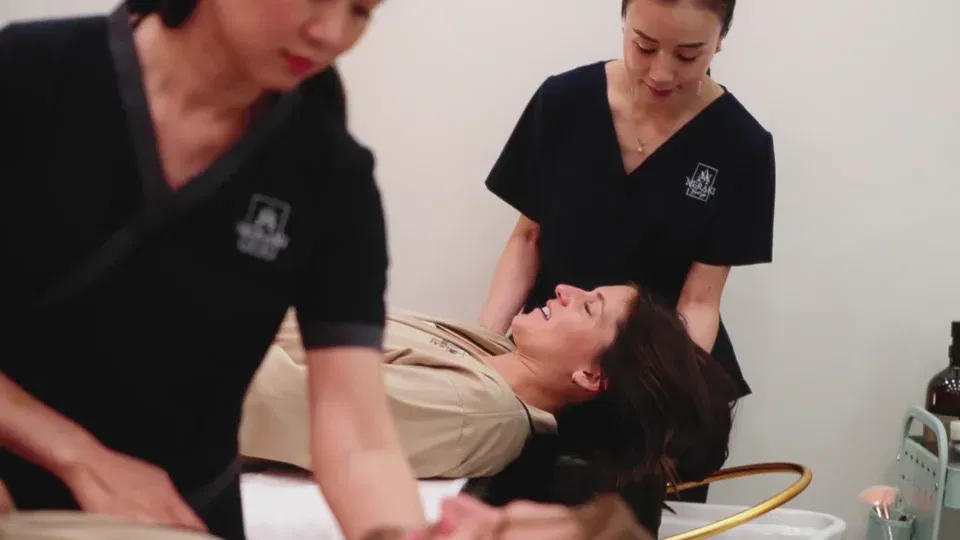
The main page includes worked examples from my own projects. You can move between the subject, treatment, and connection, with frames and timecodes beside the explanation. For Meraki Head Spa, the task was to introduce the service experience. Showing the wash stations and hands-on treatment gives a first-time visitor something concrete to picture. A finished-hair montage would emphasize the result while leaving more of the service unexplained. The direction for the brief is to show the setting and treatment alongside the result.
For asTech AIO, the task was instruction. A close view of the tablet gives the explanation a specific interface to reference. The wider workshop view shows the technician, equipment, and vehicle around it. The brief needs both views, paired around the steps they explain. A screen-only guide would give the interface more space and leave the physical setup outside the explanation. These are different assignments with different visual needs. RVI helps you describe that difference before you commit to the shots.
Bring your own film, treatment, or brief
The self-assessment takes you through five steps about your project. You describe the material you have, the audience, what needs to come across, your creative approach, and where people will watch. You can mark decisions as undecided. You receive a preview before entering an email address to unlock the full assessment and editable production brief. The report uses your answers to identify decisions to resolve, explain creative directions and tradeoffs, and suggest relevant reference studies when there is a match. You can edit the brief, copy it, or save it through Print. That is the practical outcome I wanted: a brief with reasons behind the visual choices and questions the team can check before production. Predicting audience response would require audience testing and outcome data beyond these studies. Open the Raw Vision Index to explore the examples, or start with your own project. If you want me to review the work, you can carry the brief into the contact form and submit an inquiry after you have edited it.