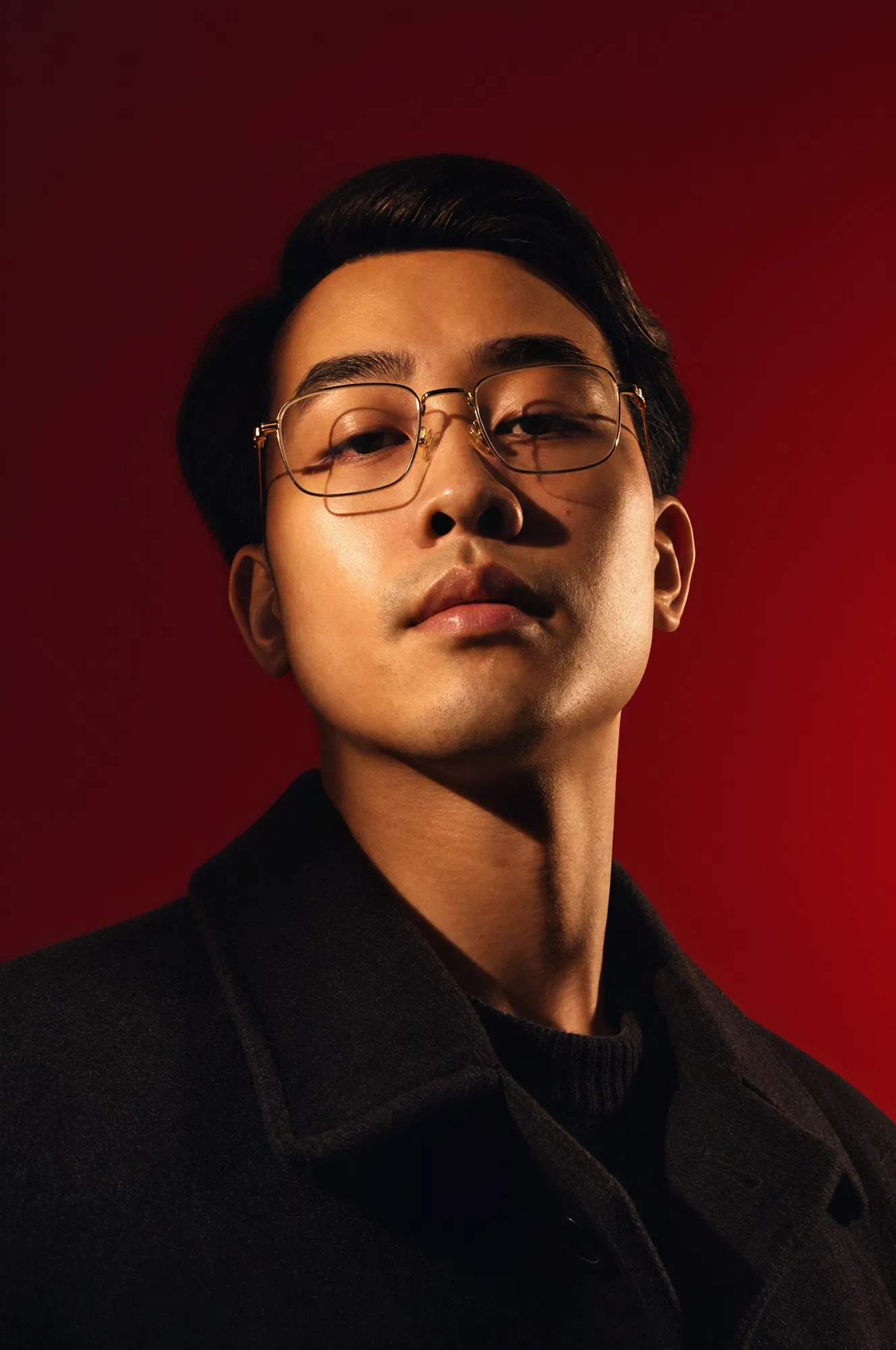
Setting up a 3-camera studio debate in 60 minutes with a room full of eyes
When a creative media agency brought me on as the Director of Photography for a studio shoot in Houston, the production plan was already aggressive. We were filming a long-form viral debate featuring Mando, the founder of WAAS, taking on ten contestants simultaneously in the style of a Jubilee or 20v1 format. The original schedule gave me a tight thirty-minute window to load in and build at 10:30 AM before talent arrived at 11:00 AM. But when we pulled up to the facility, the studio doors were locked. Management did not let us inside until exactly 11:00 AM, right as all ten contestants walked through the door behind us. That meant I had to load in, uncase, mount, cable, level, expose, and test three cinema camera rigs, two table-mounted boom arms, dual-layer audio systems, and wireless transmitters by myself with eleven people sitting in chairs watching every move. A couple of contestants helped carry gear cases from the car, but the entire technical build fell on me while the director handled talent consent forms. We called roll at 12:00 PM sharp. Setting up a three-camera multi-cam studio rig solo in sixty minutes was high pressure, but taking shortcuts on set creates nightmares in post. Here is the exact technical blueprint and on-set workflow I used to make sure our footage and audio rolled cleanly without failure.
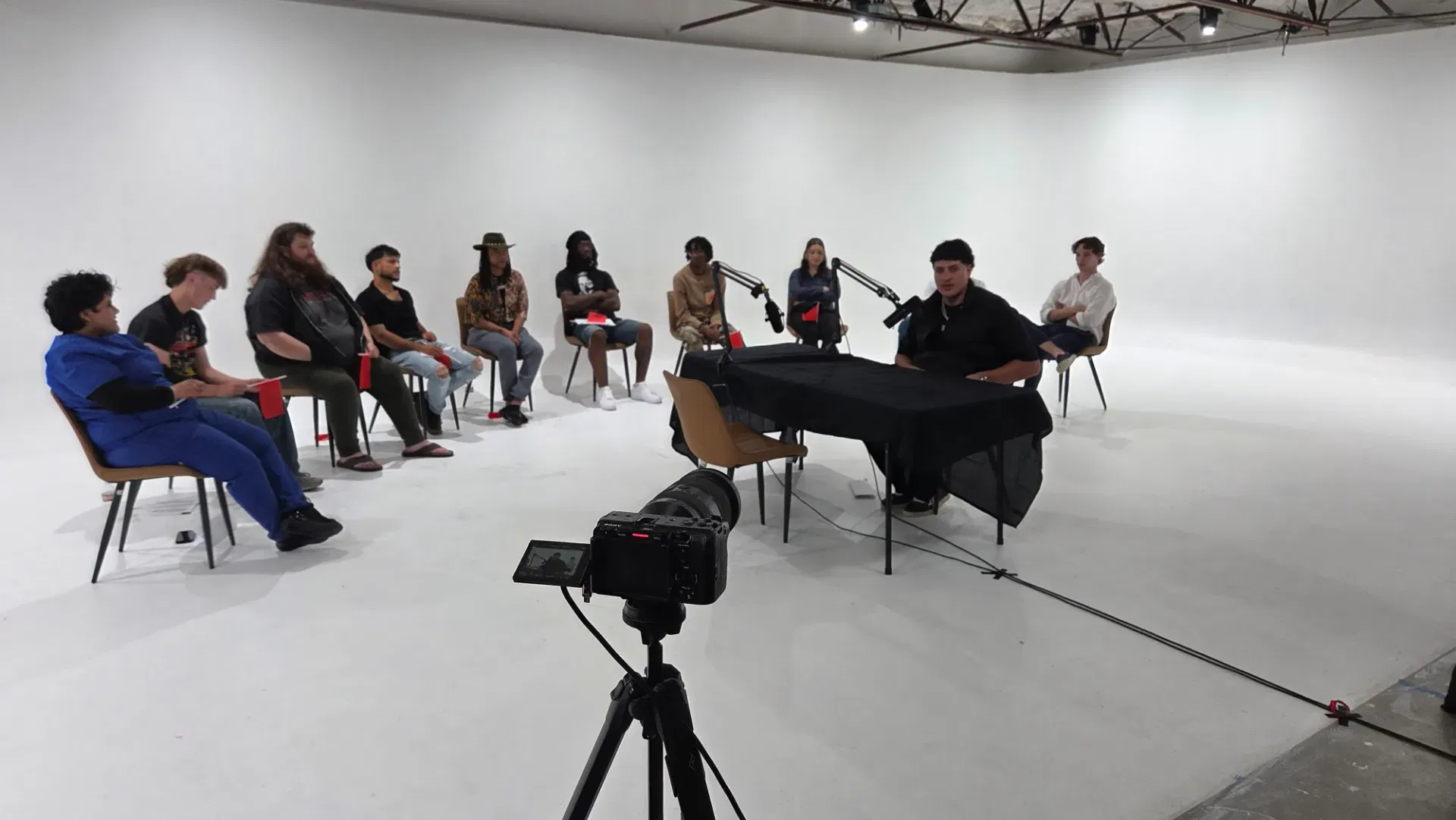
The 3-camera FX3 lens strategy: balancing wide context with tight singles
For rapid-fire debate formats where ten people can chime in at any moment, single-camera coverage is impossible. You need continuous visual context of the room alongside flattering, compressed singles of whoever holds the floor. I built the setup around three Sony FX3 bodies, all recording 10-bit 4:2:2 in S-Log3 using the XAVC HS codec as requested by the agency team for post-production color flexibility: Center Master Camera: Rigged with the Sony FE 16-35mm f/2.8 GM II. This wide angle was locked onto the center table, capturing both Mando and the contestant while keeping the semi-circle of waiting participants visible in the background wings. Camera 2 (Host Single): Armed with a Tamron 35-150mm zoom, locked between 85mm and 100mm. This framed Mando from the chest up, throwing the white infinity wall into a soft, clean blur. Camera 3 (Contestant Single): Fitted with a Tamron 70-200mm, also dialed into the 85-100mm sweet spot for matching facial perspective and compression across cuts. All three bodies were locked to identical manual settings: calibrated 5300K white balance using a dedicated grey card against the overhead studio lighting grid, a 180-degree shutter angle at 24fps for natural motion blur, and matched aperture values so the footage cut together cleanly in DaVinci Resolve without exposure jumps.
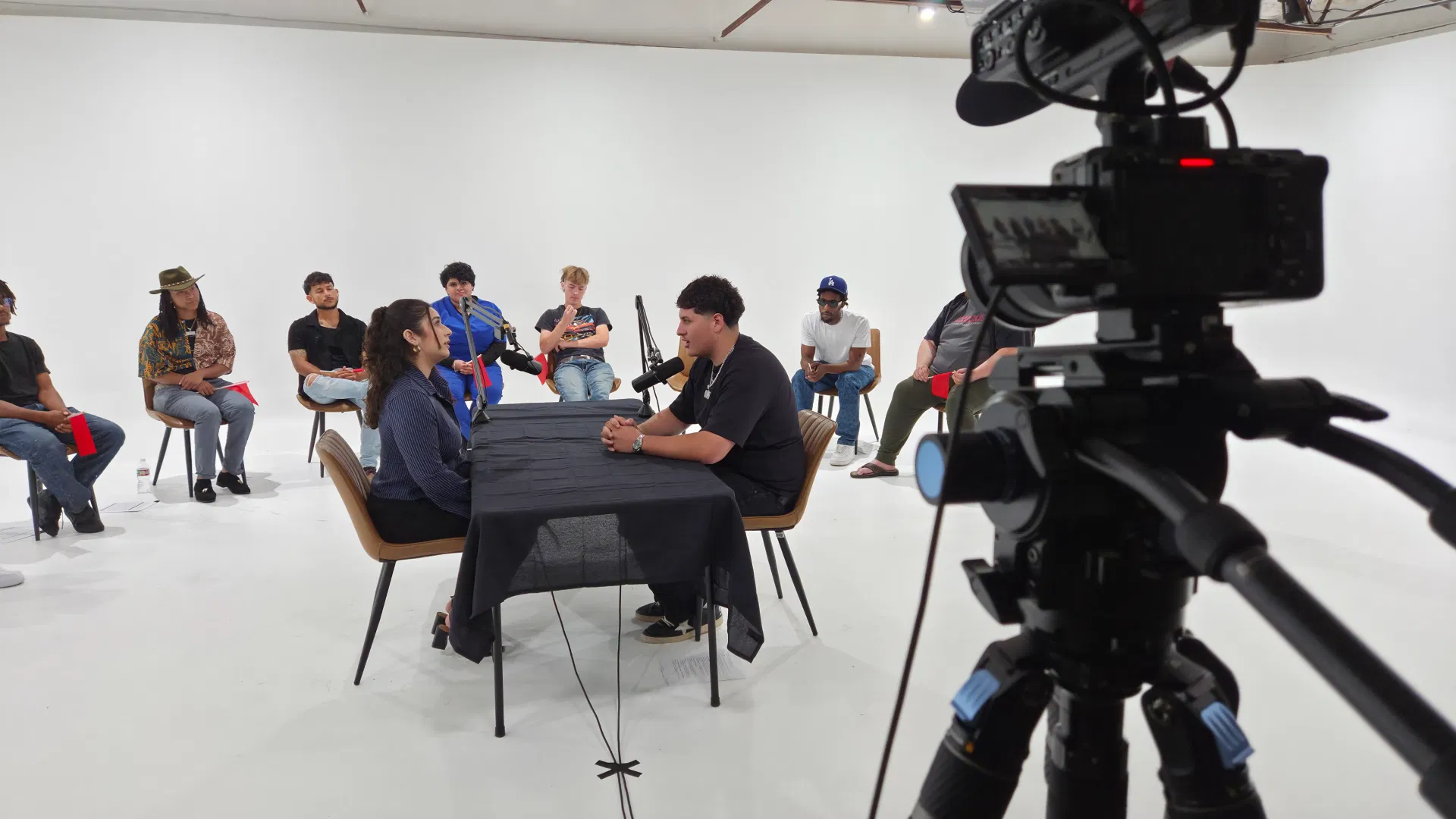
Autofocus tracking vs manual focus on animated debaters
On scripted interviews, manual focus is king. But in a fast-paced debate about wealth, business scaling, and college degrees, people get animated. Contestants lean across the table, throw their hands up, slouch back in their chairs, and shift constantly. With only one person behind the camera line, pull-focusing three moving subjects across two dynamic focal lengths while watching audio levels is impossible. I leaned on Sony's Real-Time Eye AF tracking on the FX3 bodies. It kept the subjects razor-sharp as they shifted positions. Managing three monitors solo still comes with risk. In a couple of instances during rapid movement, a tracking box drifted to a background contestant. Managing multiple screens meant catching those moments quickly and tapping the monitor to re-acquire the primary subject before the shot was lost.

Dual-layer audio architecture: 32-bit float and redundant wireless
In video production, bad visuals can sometimes be salvaged, but distorted audio ruins a video instantly. In high-stakes debates, participants alternate between quiet murmurs and sudden shouting matches. To eliminate the risk of digital clipping, I clamped two heavy-duty boom arms directly to the center table with two Shure SM7dB dynamic microphones. These ran into a Tascam DR-40X recorder capturing isolated 32-bit float audio tracks. The 32-bit float recording gave the post-production team unlimited dynamic range, ensuring no shouting clipped and no whisper got lost in the noise floor. Because equipment failure on set is always a possibility, I added a redundant safety layer using a Rode Wireless Pro kit. I placed one wireless lavalier directly on Mando and hid a second wireless transmitter near the table boom. The FX3 cameras recorded internal scratch audio, leaving post editors to align the independent tracks by waveform in seconds. The real physical hurdle on set was boom placement. Over the course of the day, ten different contestants took the hot seat. Some were tall, some were short, some leaned in close, and others sat deep in their chairs. Between every single round, I had to physically re-position and re-angle the boom arm to keep the capsule within four inches of the speaker's mouth without blocking camera sightlines.
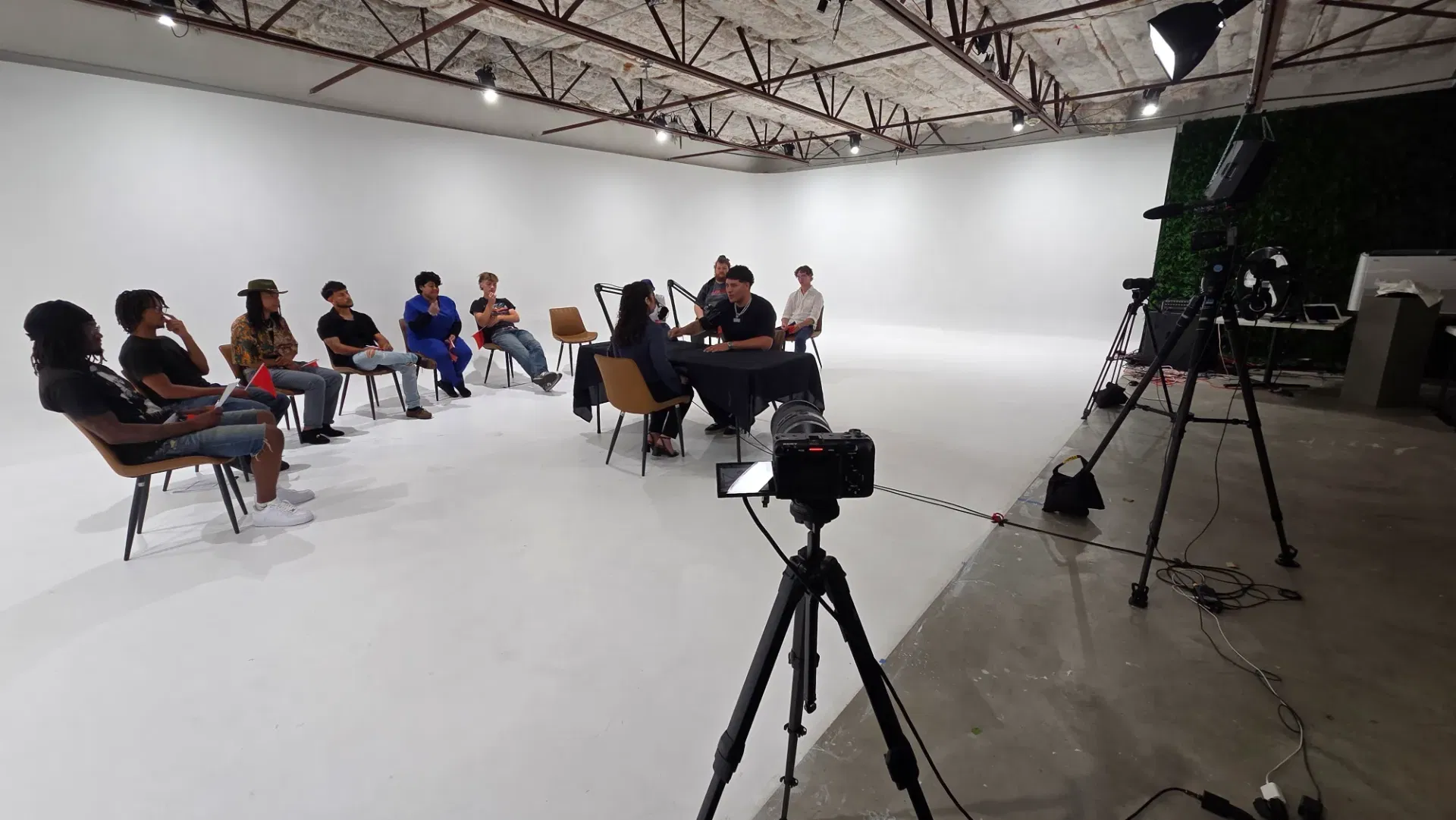
The golden rule of solo production: never skip the laptop test roll
When you are thirty minutes behind schedule and an entire room is waiting for you to hit record, the temptation to skip technical rehearsals is overwhelming. Doing that is how corrupted media cards or mismatched framerates slip through. Before calling official roll at 12:00 PM, I ran a sixty-second test recording on all three FX3s and the Tascam recorder. I immediately pulled the SD cards, mounted them on my laptop, and verified that all three video files opened, codecs matched, and audio waveforms registered cleanly. That two-minute verification gave me complete confidence to shoot uninterrupted for the rest of the day. One funny side note from set: I bought a fresh box of donuts that morning hoping to leave a great impression with the crew and cast. The one donut I grabbed for myself before load-in ended up being the only thing I ate until 7:00 PM. Operating three cinema cameras on a tight schedule will burn through your calories faster than you realize.
Director feedback & post-production delivery
Despite the delayed studio access, rigorous prep and on-set pacing kept the shoot moving without a single technical hiccup. The production director highlighted our efficiency and calm problem-solving on set.
"Chi was completely on top of it from the second we walked in. He built a complex three-camera multi-cam setup under serious time pressure, kept exposure and audio flawless all day, and made our entire production look like a high-budget broadcast. Exceeded expectations in every way."
When shooting multi-camera formats on a white infinity wall, technical discipline is everything. Pre-build your kits, lock your exposure values, run your test clips, and never compromise your audio pipeline.