Like a Girl
This Always campaign challenges the negative connotation of the phrase "like a girl" by showing how people of different ages interpret and then redefine it. The creative treatment involves asking individuals to perform actions "like a girl," revealing initial stereotypes, and then asking them to reflect on the impact of the phrase and how they would redefine it, ultimately connecting to the brand's message of championing girls' confidence.


At 0:24, a young boy with dark, curly hair is shown in a medium close-up, wearing a plain yellow t-shirt against a dark blue backdrop. His eyes are wide, looking right, and both hands are raised in front of him, fingers spread, in a gesture that suggests surprise or confusion.
This moment establishes the core problem by visually demonstrating a child's ingrained, almost exaggerated, and often negative interpretation of performing an action "like a girl," highlighting the societal stereotype the film aims to challenge.
At 1:35, a blonde woman with long, wavy hair and blue eyes is shown in a close-up, looking directly at the camera with a slight, confident smile. She is wearing an olive green sleeveless vest over a light pink top. Her expression is calm and self-assured.
This moment captures the central treatment by showing a participant reflecting on the phrase and offering a thoughtful, empowered redefinition, embodying the shift from stereotype to positive affirmation that the campaign seeks to achieve.
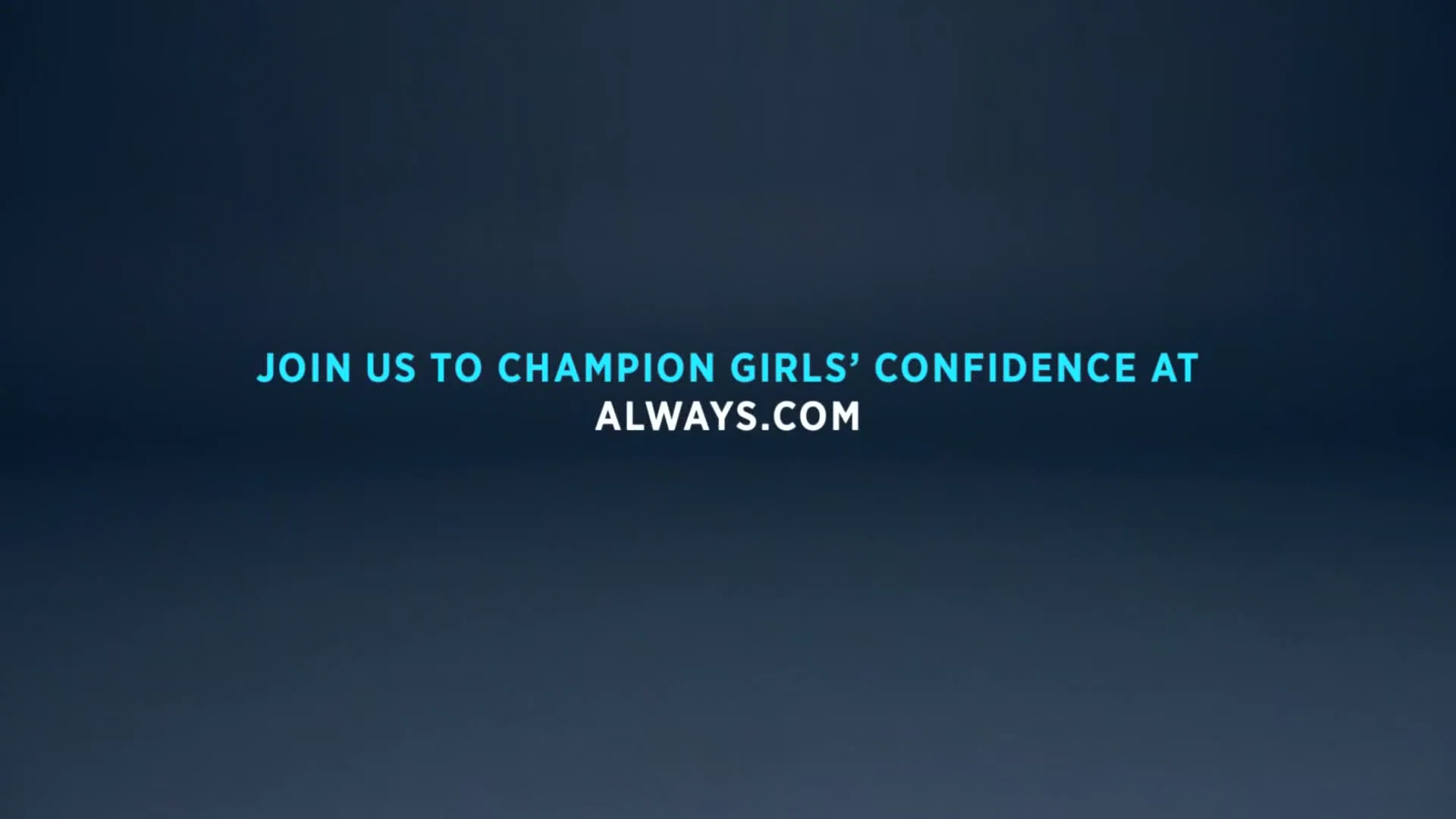
At 2:58, the screen displays a dark blue background with bright blue text that reads: "JOIN US TO CHAMPION GIRLS' CONFIDENCE AT ALWAYS.COM". The text is centered and clearly legible, serving as a direct call to action.
This moment connects the narrative's promise of re-evaluating and championing girls' confidence to the Always brand, providing a clear call to action and associating the brand with an empowering social message.
Selected frames, transcript, motion, and sound. Source & coverage below.
An approach to borrow.
This film structure is particularly useful for creative directors or strategists aiming to challenge a deeply ingrained negative stereotype, reframe a problematic phrase, or launch a social impact campaign that positions a brand as an advocate for empowerment and positive change by showcasing a transformation in public perception.
The inquiry moments seamlessly connect: the initial subject frames reveal the prevalent negative stereotype, the treatment frame captures the pivot to self-reflection and redefinition, and the final connection frame delivers the brand's call to action to champion this newfound positive perspective, thus completing a clear arc of awareness, change, and brand alignment.
Study notes & sources
How the film develops
Opening
The film opens by establishing the negative connotation of "like a girl" through visual demonstrations by participants and initial interviews where they describe the phrase as insulting or humiliating.
Development
The narrative develops by progressively revealing the emotional impact of the phrase on young girls, particularly during vulnerable adolescent years, through more reflective and serious interview responses.
Payoff
The film pays off by having participants redefine "like a girl" as a positive and powerful identifier, culminating in a confident embrace of their identity and a clear call to action from Always to champion girls' confidence.
Speech, sound & motion notes
The audio track is primarily speech-driven, consisting of interview questions and participant responses, with no discernible music or complex sound effects, ensuring a clear focus on the dialogue and its emotional delivery. The audio dynamically shifts from initial lighthearted, almost comedic, responses to more serious and reflective tones, and finally to empowered and passionate statements, mirroring the narrative arc.
Interpretation limits
This Always campaign challenges the negative connotation of the phrase "like a girl" by showing how people of different ages interpret and then redefine it. The creative treatment involves asking individuals to perform actions "like a girl," revealing initial stereotypes, and then asking them to reflect on the impact of the phrase and how they would redefine it, ultimately connecting to the brand's message of championing girls' confidence. Algorithmic 10fps motion telemetry and 16-bit PCM acoustic metrics measure cut frequency, optical movement, and loudness dynamics, but do not replace human continuous-playback viewing or independent sound-mix listening, nor do they establish commercial ROI or audience conversion outcomes.
Bring your own brief.
Discuss the choices that could serve your project.