Domino's AnyWare: One-Tap Pizza Ordering
This Domino's advertisement leverages a news report format featuring Sean Dowling to announce a new Twitter ordering system using pizza emojis. The creative treatment delivers the message by demonstrating the simple emoji-based ordering process and explaining the backend profile linking for order customization.
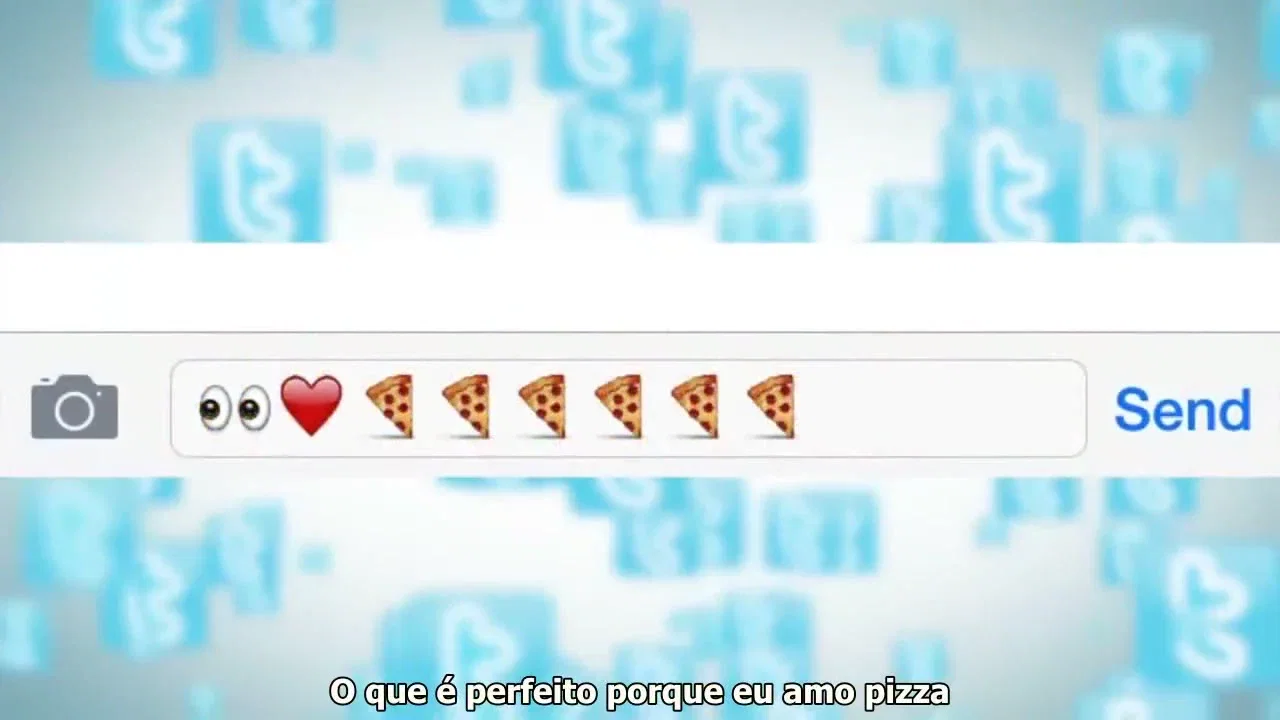
At 0:08, the frame shows a close-up of a white iPhone's screen, held by an unseen person. The Twitter message box contains emojis: two eyes, a red heart, and six pizza slices. The word 'Send' is visible on the right. The background is a light blue with blurred, floating Twitter bird icons.
This moment establishes the core subject by visually presenting the problem statement: the desire to order food without typing lengthy words, and the solution: using simple emojis for quick ordering on Twitter, directly linking to the convenience Domino's offers.
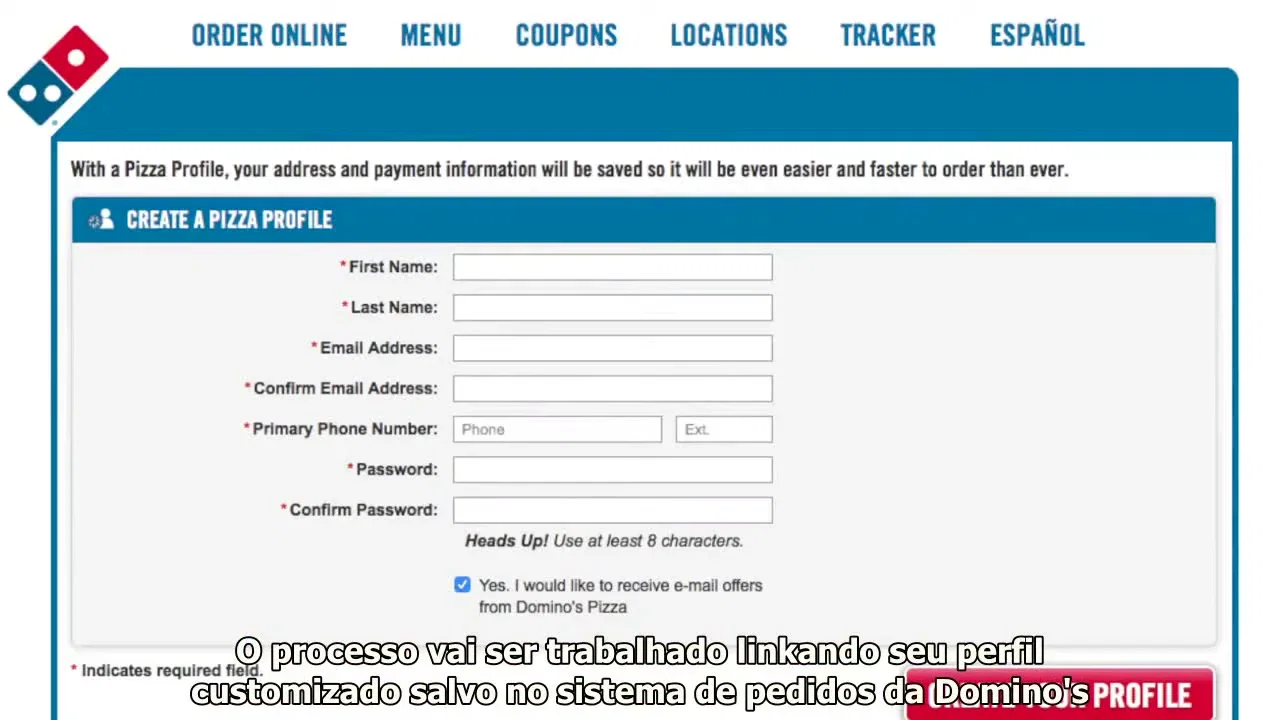
At 0:28, the frame displays a web interface for 'CREATE A PIZZA PROFILE' on the Domino's website. It shows input fields for personal information like name, email, phone, and password, alongside a checkbox for email offers. The top menu bar includes 'ORDER ONLINE', 'MENU', 'COUPONS', 'LOCATIONS', 'TRACKER', and 'ESPAÑOL'.
This moment captures the central treatment by demonstrating the essential backend process that enables the emoji ordering: linking to a customer profile for saved payment and order preferences, thereby proving how a simple emoji tweet can translate into a customized order.
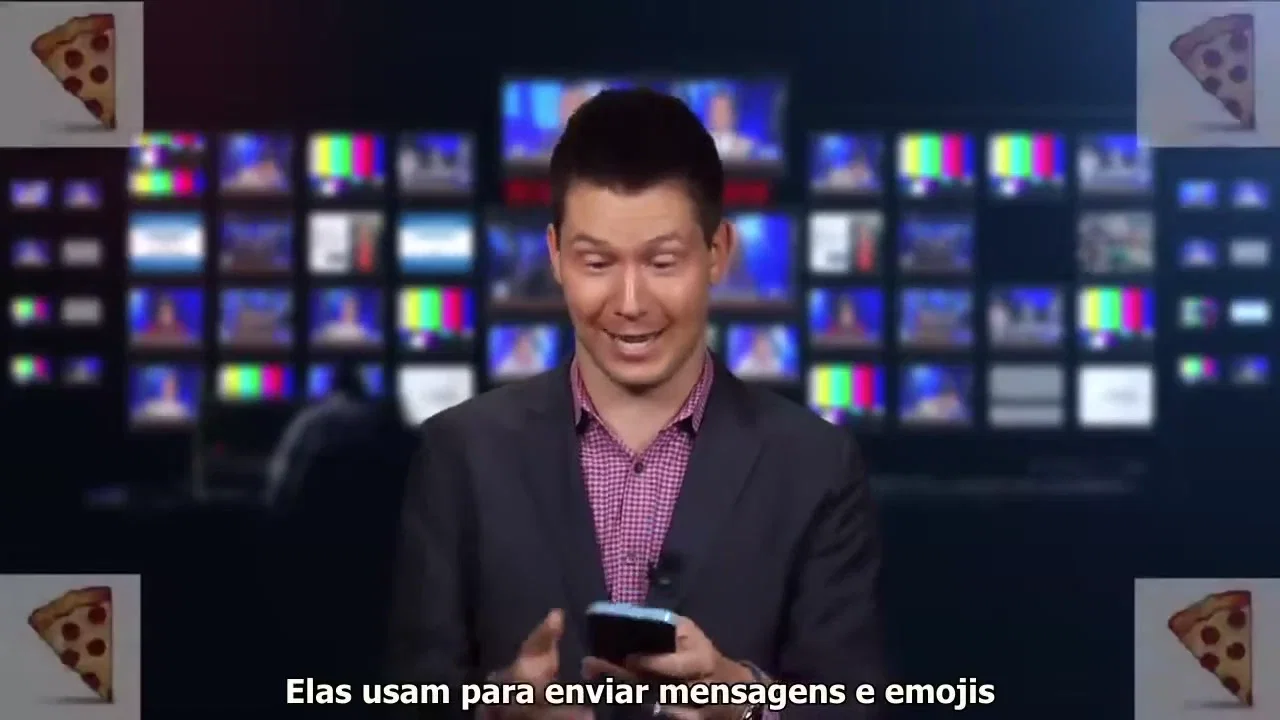
At 0:52, Sean Dowling, a Caucasian male in a suit jacket and collared shirt, is centered on screen, smiling and holding a black smartphone. He is surrounded by a grid of blurred monitors displaying various news or broadcast content. Four floating pizza slice emojis are positioned in the corners of the frame (top left, top right, bottom left, bottom right).
This moment connects the narrative promise of easy ordering to the final brand takeaway by showing the anchor interacting with the technology (phone) while being surrounded by the core symbol of the product (pizza emojis), reinforcing the modern, accessible nature of Domino's new ordering method.
Selected frames, transcript, motion, and sound. Source & coverage below.
An approach to borrow.
A creative director or strategist should reference this film structure when demonstrating innovative, digitally-driven service solutions, especially those requiring a brief explanation of backend processes to build user trust and understanding, while maintaining an accessible and contemporary tone.
The inquiry moments seamlessly connect from the opening subject (the desire for effortless ordering via emoji) through the detailed treatment (the behind-the-scenes profile linking) to the final connection payoff (the anchor demonstrating the new, simple interaction), effectively illustrating the complete user journey and brand promise.
Study notes & sources
How the film develops
Opening
The opening visually presents the problem of lengthy ordering and immediately introduces the emoji-based solution via Twitter, setting up the context for a news report.
Development
The mid-film development explains the mechanics of the system, including linking customer profiles for order customization, thereby building credibility and addressing potential user concerns.
Payoff
The closing highlights the speed and convenience of the new service, contrasting it with traditional phone calls and reaffirming Domino's as an innovative, user-friendly brand, concluding with the 'buzz60 now' call to action.
Speech, sound & motion notes
The audio track is dominated by a clear, consistent male voiceover (Sean Dowling) delivering news-style commentary. There is no discernible background music or significant sound effects beyond speech, maintaining a direct and informative tone throughout the cut. Silence is minimal, as indicated by the silence ratio.
Interpretation limits
This Domino's advertisement leverages a news report format featuring Sean Dowling to announce a new Twitter ordering system using pizza emojis. The creative treatment delivers the message by demonstrating the simple emoji-based ordering process and explaining the backend profile linking for order customization. Algorithmic 10fps motion telemetry and 16-bit PCM acoustic metrics measure cut frequency, optical movement, and loudness dynamics, but do not replace human continuous-playback viewing or independent sound-mix listening, nor do they establish commercial ROI or audience conversion outcomes.
Bring your own brief.
Discuss the choices that could serve your project.