
The pitch I keep getting: 'Let's shoot in LA or Atlanta.'
Other producers I know fly to Los Angeles or Atlanta for location work. They rent cars, hire local crew, and book hotels for a week. The math works for their clients and the footage is undeniably cinematic. I live in Dallas, and I keep shooting here. I am not going to argue that Dallas is Los Angeles. The skyline is shorter, the permits are lighter, and the light is harsher for half the year. What I am going to argue is that the city has a specific cinematic palette, and most of it goes unfilmed because nobody bothers to wait for it.
What Dallas actually has going for it
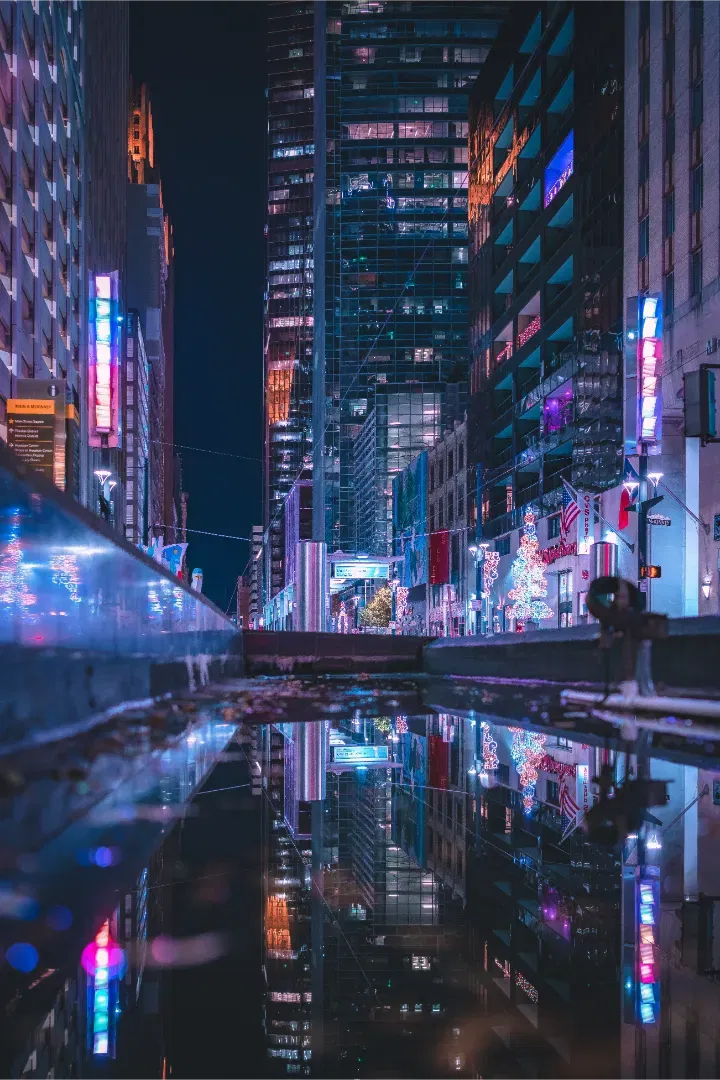
Density without altitude. The Dallas skyline is dense at street level in a way that Los Angeles is not. You can stand at a corner of downtown and frame a cyberpunk-style shot of neon reflected in a rain puddle without a drone, without a tower permit, and without a 6 AM call time. Transit that runs on time. The DART light rail and the McKinney Avenue streetcar are reliable enough that you can plan a long-exposure shot around a schedule. That sounds like a small thing until you have waited three hours for a New York subway train to surface in a frame. Weather that does the lighting for you. A Dallas thunderstorm at 11 PM turns the streets into mirrors. The combination of wet asphalt and neon signs is something I have not been able to recreate on a soundstage. None of this is novel. Cinematographers who work in Dallas know it. Producers who fly in for a single shoot do not, because they are not here long enough to learn the weather, the transit, the angles that work at 2 AM when nobody is on the street.
The steel wool shot, and what it taught me about patience
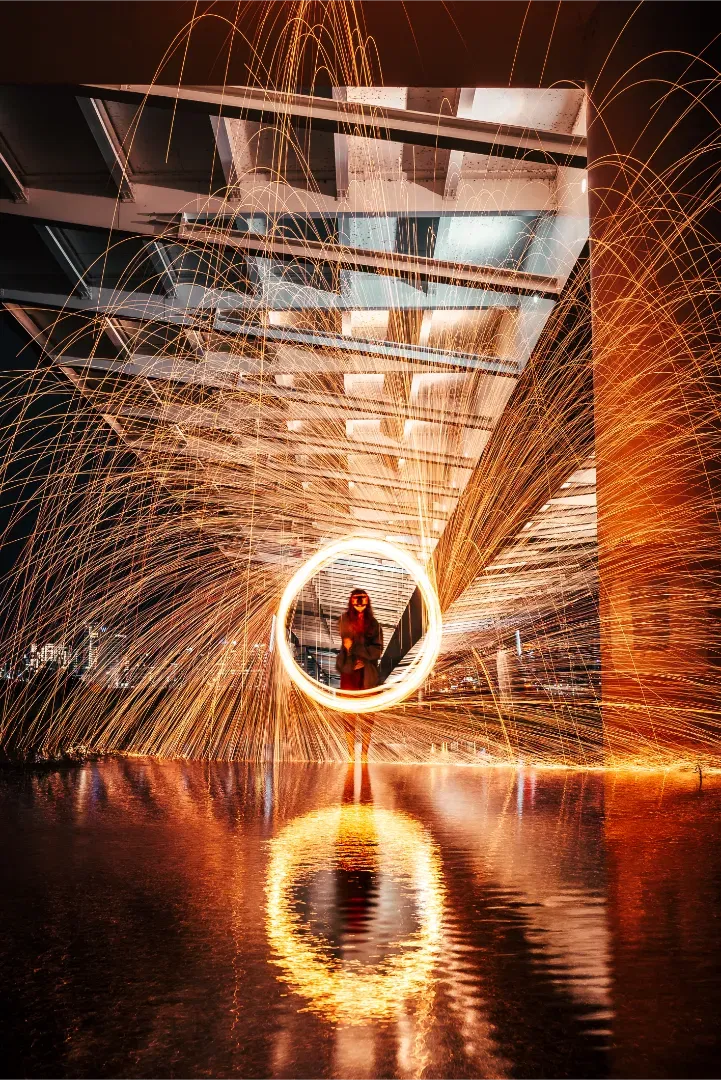
One of the stills I keep coming back to is a steel wool long exposure under a concrete highway bridge. A friend spun the burning wool on a wire whip while I held the camera on a tripod at a 6-second exposure. The wool traced a glowing orange circle against the dark underside of the overpass. The first three takes were wrong. The wind shifted and blew sparks into the camera bag. The steel wool bundle was too tight and burned out in four seconds instead of lasting the full exposure. The friend spinning the wool was too far to the left and the light trail drifted out of frame. The fourth take worked because we slowed everything down. Six seconds is longer than it sounds when you are standing near burning steel. The camera is not the hard part. The hard part is keeping the steel wool spinning at a consistent radius while the camera's shutter is open. That night taught me that the gear matters less than the people holding it. A tripod and a 6-second exposure is the same setup anyone could buy. What I cannot buy is the patience to wait for the wind to die down and re-spin the wool for the fourth time at 1 AM on a Tuesday.
The transit motion blur, and why slow shutter speed is the move
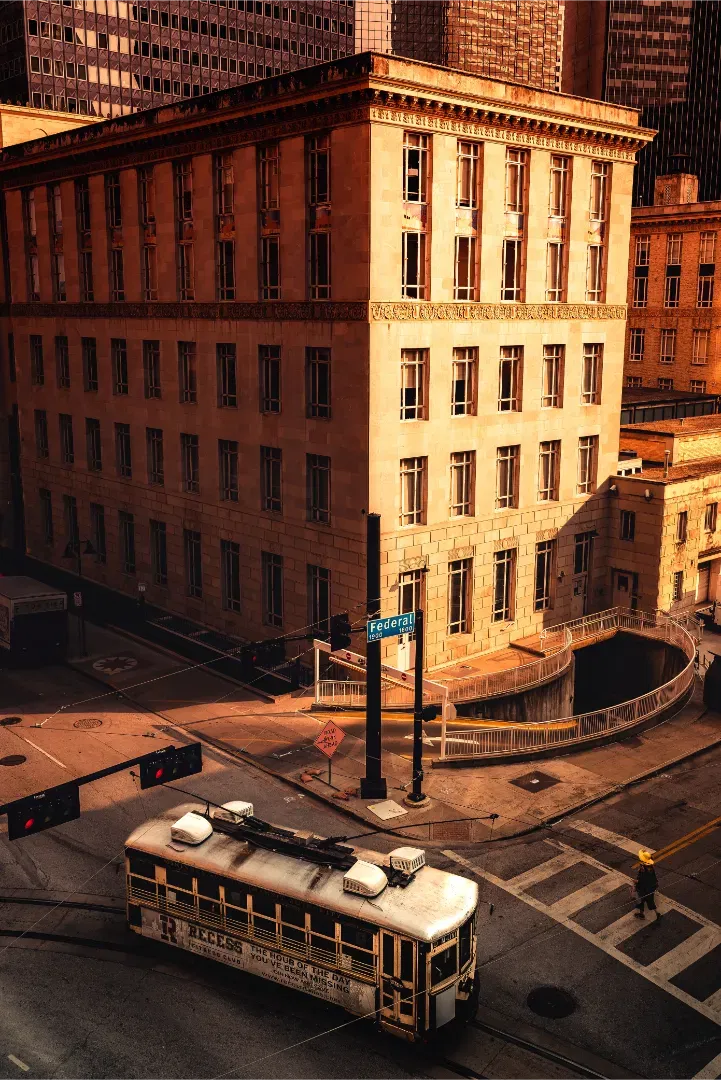
Most of the stills in my Dallas gallery are not of the city itself. They are of the city in motion, captured at slow shutter speed. A person on a BMX with the DART train blurring behind them. A streetcar at sunset smeared across a half-second exposure. A pedestrian walking between light-rail tracks while the train streaks past. These shots are not technically difficult. The camera is on a tripod, the shutter is between 1/8 and 1/2 of a second, and the moving subject does the work. What is difficult is timing the shot so the still subject and the moving subject both read clearly in the frame. I have thrown out more of these than I have kept. The BMX shot that ended up in the gallery is the one where my friend sat on the bike and waited, the train came in from frame left, and the exposure caught both of them in a single frame. The other 12 attempts had the train arriving too early, too late, or behind a pole.
The neon puddle, and why rain is your cheapest lighting kit
There is a shot in the gallery of a wet street at night with neon signs reflecting in a pool of water. It looks expensive. It is not. The frame is a Sony sensor at high ISO, a 1-second exposure, and a rainstorm. Dallas thunderstorms are frequent in spring and fall. They roll in at 9 PM and last about 40 minutes. During that window, every street with a neon sign becomes a free lighting setup. The wet asphalt acts as a mirror, the rain softens the highlights, and the city is empty because nobody walks around in a thunderstorm at 10 PM on a Wednesday. The mistake I made early on was trying to use this kind of weather for video. It does not work for video because the rain is inconsistent and the reflections change between frames. It works for stills because each frame is a separate decision, and a single perfect moment is enough.
What I would tell a producer considering a Dallas shoot
A few things I learned the hard way: - Stay for at least four days. The weather here is unpredictable, and the golden-window light does not show up on a one-day schedule. - Scout at night, not during the day. The cinematic version of Dallas is the one that lights up after 10 PM, and you cannot predict which intersections will work until you are standing in them with a camera. - Plan around the DART and McKinney Avenue streetcar schedules. The transit is reliable, and timing your shot to a specific train or car is the difference between a working frame and an empty one. - Bring a tripod, an ND filter, and a flashlight. You are going to be walking around in the dark for hours, and the only way to get sharp long exposures is to stop down and let the shutter run. - Get a friend to help. A solo night shoot in an empty downtown is fine if you stay in well-lit areas, but most of my best Dallas stills came from shoots where a second person held a light, spun a steel wool bundle, or stood in frame.