
Why do traditional agencies avoid small business video projects?
I get a steady stream of inquiries from small businesses. Tattoo studios. Head spas. Local martial arts schools. Mom-and-pop restaurants. The kind of businesses that have real craft, a real customer base, and a website that was last updated in 2010. Most of them have never made a video. Most of them do not have a marketing team. Most of them have a vague sense that they should be on social media more, and a tighter sense that they cannot afford a Dallas agency to do the work. The agencies I have worked with will not take these clients. The margins are thin, the briefs are vague, the timelines are aggressive, and the deliverables are usually a 60-second social cut and a single hero video. That is not a project an agency can staff for and still pay its people. The small business gets a polite no, or a quote that is 4x what they can afford, and the work does not get made.
The Whittling Wizard Tattoo shoot, and why I charged what I charged
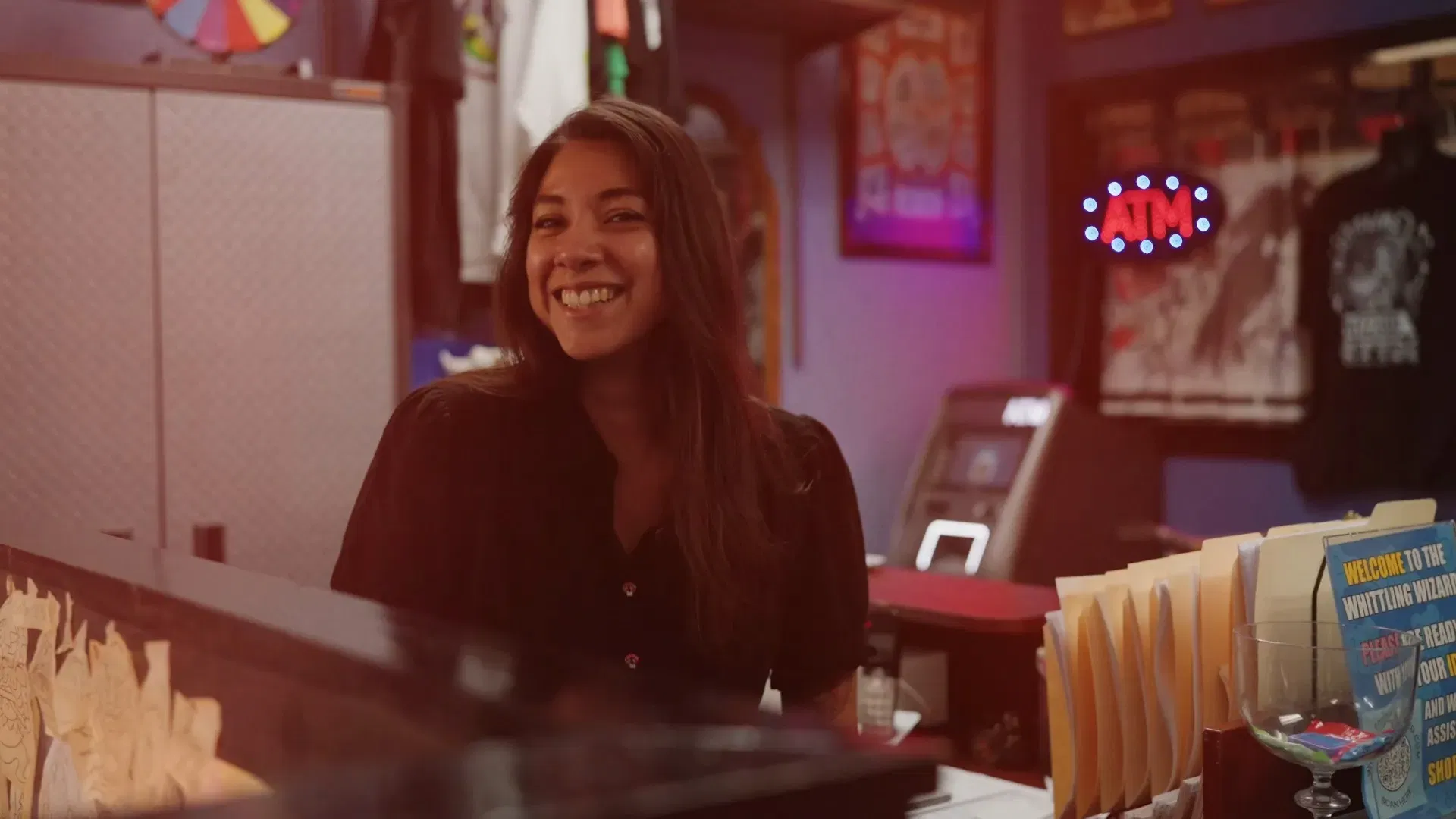
In 2023, a tattoo artist in Dallas reached out. He had been inking for over a decade, his work was featured in regional publications, and his studio had a five-star rating on Google with hundreds of reviews. He had never had a video made about his craft. He did not have a marketing budget. He had saved up enough to pay for a single shoot day, and he wanted the video to help him reach clients beyond the local walk-in crowd. The work I would have charged at my standard rate was more than he had saved. The work I quoted at a reduced rate was something he could afford, and the result would be a real asset for his business. I took the shoot. I charged less than my standard rate. I would do it again. The reason is not charity. The reason is that the work was good, the artist was good, and the video would land. There is a difference between working for free and working at a rate that matches what the client can pay. The first is unsustainable. The second is a real business decision.
What small business shoots actually require from a producer
A small business client does not have a creative director. They do not have a brand manager. They do not have a script. They have an instinct that video would help, and a budget that does not leave room for trial and error. The producer becomes the entire production department. I am the DP, the gaffer, the sound recordist, the on-set director, the editor, and the colorist. The client gives me access to the space and the people, and I make the creative decisions they cannot make for themselves. For the Whittling Wizard shoot, that meant arriving at the studio with a small lighting kit, a single camera, and a rough shot list. The artist had told me he wanted the video to feel 'like a film.' I knew he did not mean Hollywood. He meant the difference between a phone-shot clip and a frame that someone would stop scrolling for. I built the shot list around the studio's existing light, the artist's hand during a session, and the details of the workspace that made the studio feel like a real place. The result was a 90-second brand profile and a set of social cuts. The artist uses the brand profile on his website and the social cuts on Instagram. The work is doing what it was supposed to do.
The 'what to expect' gap that most producers underestimate
When a corporate client hires me, they usually have a sense of what they want. A case study. A product demo. A brand anthem. They have seen other corporate videos and have a mental model of what their video should look like. I still need to make the creative decisions, but the brief is not blank. A small business client does not have that mental model. They have never hired a video producer. They have never written a creative brief. They have a vague sense that they need 'a good video,' and they are hoping I will translate that into something real. The translation is the job. I have learned to spend the first 20 minutes of any small business conversation asking questions the client did not know they needed to answer. Who is the video for? Where will it live? What do you want someone to do after watching it? What do you want them to remember? The answers are not always clear, but the conversation gives the client language for what they actually want, and it gives me a brief I can shoot against.
Why I keep doing this work, even at a lower rate
The math on small business work is straightforward. I charge less than my standard rate. The shoots are usually one day. The deliverables are a hero video and a few social cuts. I do not make as much per project as I would on a corporate B2B shoot. The reason I keep doing it is that the work is varied, the clients are grateful, and the videos actually get used. A small business owner who has saved up for their first video is going to put that video everywhere: website, Instagram, Google Business Profile, the lobby TV. The asset does not sit in a corporate archive. It works. There is also a long-game argument. The small business I shoot today might be the mid-size business in three years, and the work I did for them at a reduced rate is the reason they call me back at full rate when they are ready to scale. The reduced-rate work is not charity. It is pipeline development with a longer timeline than most producers are willing to wait for.
What small business work has taught me
A few things I took from the Whittling Wizard shoot and the other small business projects in my portfolio (Meraki Head Spa, We Give More, Shaolin Kung Fu): - The client does not have a creative director, so I am the creative director. The shoot is more efficient if I plan the framing, the lighting, and the edit before the day of the shoot. - The shoot itself is usually 4 to 6 hours, not 8 to 12. Small business clients cannot afford a two-day shoot, and the work does not need one. Plan tighter coverage rather than more hours. - The voiceover or the artist dialogue carries the video. The visuals support what the person is saying. The b-roll is filler for cuts, not the main event. - The deliverable is not a single video. It is a hero video plus 3 to 5 social cuts that the client can post over the next 60 days without thinking about it. - Charge what the client can afford, not what the work is worth. The two are different. The first is the actual business decision. The second is the fantasy.